
An integral part of building a creative identity in undoubtedly reinvention. Many of the greatest musicians to grace our earth have been, at certain points in their career, unrecognisable in comparison to the image they eventually become known for. Finley Olley – known as FIGGY in a musical capacity – is no exception to this rule. Having started out on the Isle of Harris making lo-fi pop on pirated software to releasing his latest album ONE WAY FENGWAY this year, he’s already got a storied career under his belt. Odd Girl Out sat down with the artist behind the music to discuss evolution, slop and the future of Scottish music.
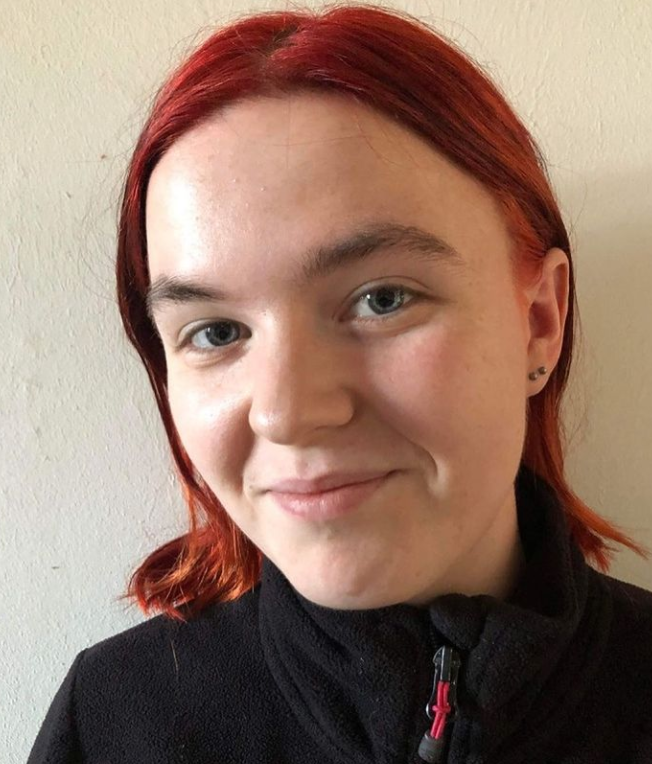
Olley’s face fills the screen as we begin our Zoom call. Fresh-faced and permanently grinning, he’s currently in Fort William to study an outdoor leader course, something that was apparently decided on a whim. His brand-new album ONE WAY FENGWAY was released just over 2 weeks ago, the first full length project released under the moniker of Figgy – but this is far from the artist’s first rodeo. Having started making music while still in school, Olley began his journey on a pirated version of Fruit Loops built into his computer by his brother.
“I was immediately hooked and started making lo-fi hip hop, if you remember that craze.”
“It was crap, naturally, but it was good enough to get signed anyway. I got signed to a label called AWOL, they represent quite a lot of like cool people like Loyle Carner. At the time it was like Loyle Carner, Tom Misch, and a bunch of other independent people.”
“For me it was immense. It was huge. I released an EP. I think it was called Ruminate when I was about when I was 15, I think. And one of the songs was on a lo-fi playlist in America. So, I had some success. I didn't have much. It was like, 1000 listens for at least for one of the songs, so that made me really, and that was really cool to see.”
Following this initial foray into a music career, Olley decided to try his hand at singing, forming his high school band Better Next Week, before releasing his albums Standing Waiting and Heart and House under the name TheHerac – a stylised version of the Scottish Gaelic word for someone hailing from the Isle of Harris.
Despite his many musical identities, Olley has always been able to build a persona, something he credits to his experimentation.
“I'm really happy with how the albums have shaped me. It was three albums and an EP, and they all just sort of slowly got better. I call them the gunk years or the slop years – I did one a year, you know what I mean? I was a printing press for slop. I was like AI before AI happened.”
“I've learned a lot about the music industry and what not to do, mostly. But also, I take stuff from my old music that I really liked. I still stack my vocals loads, which I've always done. That was always a big part of my sort of brand, D'Angelo-esque stacking, which I've leaned into a lot more now in this new album.”
This album has been something of a labour of love for FIGGY and for Olley; the recording and production process has taken two years, with the closing track SAVE YOU being completed three years ago.
“I did that after my last album, the last Herac album. And that was sort of a moment for me where I was like, right, I want to go a different direction. I want to be doing better. And I ended up doing the same thing again. I ended up deleting all the songs. Like this album has been finished maybe three times. Some of the songs have been like worked on for like 2 years and for some it was like 2 hours.”
“The ones that I like the least are the ones that I spend the most time on. And I think other artists will agree with me that when you try so hard on something to make it sound good, you end up losing the original vibe of it. The ones I'm thinking of are the two songs, Hate and Love, that are next to each other. I spent so much time on that one, trying to make them sound good that they just don't sound good to me anymore.”
Olley’s ability to switch from jovial and wise-cracking to instantly serious and introspective is truly fascinating – it lends our conversation an air of gravity. I pointed out that this is a symptom of reading or listening to something of your own too much - you're looking for meaning where you have deemed that there isn't any. Olley agreed, but in turn highlights that most of his songs don’t have any meaning anyway.
“A lot of my stuff, even my old stuff would just be like, pretending to be someone else, like an actor. I'm basically like a musical actor. I pretend, I put myself in these imaginary situations and make music like I'm in those situations.”
Following a conversation of incredible introspection and scope, I was particularly curious to hear Olley’s thoughts on challenges facing young Scottish musicians. The obvious threat of AI was mentioned almost immediately; but as always with Olley, an interesting point of view was raised.
“If your music doesn't sound like it's AI generated, if it sounds more raw and pure and a bit shit, you know, no one's going to think you're AI. AI is sort of a blessing in disguise apart from the whole world ending scenario section of it, because people who are true to their art and not the commercialization of it will use it as an opportunity to make real music again.”
“Stuff like using your phone microphone, just sitting down, whatever, doing that. We're going to see less slop again. I mean, it's a sort of ideal. Like there's a Gaelic rapper called Limonead. She's doing really well in Scotland right now because you can tell it's not AI generated. It's like crunchy. It's not, it's not this polished sound. It's really cool.”
“Yeah, so it is a blessing in disguise for small musicians because it gives them freedom to be weirder, I guess, and a bit more out of pocket. Like you're not as pressured now to master all your music perfectly or use compressors or whatever. But as long as it's true to you, and how you make me, how you make music and music you like, it's going to do well.”
As an artist, FIGGY has passed through many phases and identities; as an individual, Finley Olley has grabbed life by the lapels; but it’s where these two senses of self intersect that the magic happens.
Written by Charlotte Atkinson
Post a Comment